Monday, October 5, 2015

Ristorante Trussardi alla Scala, Milan


Ristorante Trussardi alla Scala, Milan, Italy, 9/23/2015, 50 Euro, Michelin 1-star

Trussardi alla Scala, offers sophisticated French-Italian cuisine. It used to have 2 stars and lost one star because of the departure of previous chef. You can see the side view of alla Scala Opera House if you happen to have a table by the window.


I had a la carte lunch. The restaurant provided complementary amuse bouche and petit fours.

First, a colorful bowl of crisps were brought over as a starter. They were polenta crisps with different flavors – tomato (in orange color). Spinach (in green color), original (in light yellow color), squid ink (in purple color) and black (black rice). Black rice crisp was made of overcooked black rice which was then pressed into paste, dried, cut into pieces and fried. These crisps had the appearance as well as the taste. They were much tastier than the potato chips as the starter. 

Amuse Bouche
I. 1) Fried Anchovies – very fresh and tender
   2) Crispy Foccacio – ultra thin slice of waffle with goat cheese, sprinkled with chopped   prosciutto ham and covered by an arugula leave.


II. Liquid Pizza – It looked like a pizza, except it was in liquid form with mozzarella cheese, basil leaves, baby oregano and burned red onions. I requested for some parmigiana cheese, but was informed by my server that liquid pizza should be eaten without parmigiana cheese.


1st Course - Spaghetti “cacio e pepe” with sea-urchins

This has been one of Trussardi’s signature dishes. The type of spaghetti used in this dish looked like #8 in US. It was cooked medium (al dente), definitely not soft. The cooked spaghetti were swirled to shape like a small cone, then topped with sauce made of tomato, three different types of pepper, sea urchin. Daikon sprout, parsley, dill and shredded pecorino cheese were placed on top for garnishing. Sea urchin was not half cooked, when mixed with tomato and cheese, made the overall taste very pleasing.


2nd Course – Monk Fish with Kumquat and Curry

Monk fish was seared, then broiled, served with sliced wedges of kumquat, mustard, kumquat jelly and fresh herbs. At the bottom, it was lentil cooked with broth. In the plate, there was also some curry powder. I liked the fused taste of curry powder with fish and other ingredients in this course. 

Petit Four – 3 categories

1). Salted peanut with bitter cocoa. I am usually not too crazy about peanut. But, the way peanut was prepared, it was the best peanut-based desert that I have ever had.


2). a).Mini-croissant with hazelnut cream;
     b).Chocolate madeleine with strawberry filling
     c).Pomegranate jelly candy – it was very good  
     d).Macaroon with rice Sake filling – a creative taste


3). a). Cocoa powder covered chocolate truffle
     b). Raspberry flavored marshmallow
     c). Chocolate tart – mini baba rhum
 

The petit four were all with high quality and tasty. I considered this lunch a bargain.


Sadler, Milan

Sadler, Milan, Italy, 9/24/2015, 75 Euro

The restaurant, with two Michelin star, is named after owner/chef Sadler, with a lot of contemporary paintings on the wall. It is located on the edge of Milan, you have to take the metro then bus. Anyway, it was a challenge to find it. Since I had another appointment at a Michelin 3-star restaurant the following day, I decided to choose a small menu, Young Menu comprised of 3 courses.

Amuse Bouche – 2 courses
I.

1).Burrata cheese with broccoli juice, chopped black olive and bread crumb on top


Burrata cheese has a lighter texture than Mozzarella and is a bit more flavorful and creamier than Mozzarella.

2).Cream of potato and mussel (at the bottom), fried rice and tomato chunk. Mussel was fresh, plump and juicy.

3).Fried Cod fish and potato ball – well prepared. It was not too salty or greasy.

4).Corn chip cup filled with Robiola cheese and Rescione (smoked salmon roe).


II. Roast beef with orchid flower, mashed pumpkin, and a bit of chili green powder. Roast beef was of prime quality in rare medium.


House-made bread with tomato, egg plants, mozzarella and oregano. It was almost like a half-way pizza. In addition, bread sticks were served.


1st Course – Black Cod fillet, goat milk caviar, smoked potato foam, buckwheat flour gnocchetti and marinated spring onion, arugula salad.


Black cod was cooked rare-medium with crunchy skin. Goat milk caviar is not goat cheese, it was jello made from goat milk. Smoked potato foam made sauce tasty. Orange colored salmon roe helped to balance out the creamy taste of the sauce.

House-made olive bread, grissini, and bruschetta were served.


2nd Course – Lamb rib with foie gras, wrapped in almond & crust fried


Lamb rib was wrapped in crust, coated with almond, and filled with foie gras and black truffles. There were 7 large slices of truffles on the side. In addition, there were snow peas, white radish, celery, fennel, zucchini, baby carrot and beet powder (on the lower right hand side of the photo). It was a very sophisticated dish. The tastiest item in this plate was the sauce made of lamb juice and truffle (served in the bowl). It was rather odd that with all the rich ingredients used, this dish was good, but not exceptionally good. I remembered three years ago I had a lamb dish at L’Epicure in Paris. Its signature dish Lamb with Nori, with sauce on the side, was so finger licking good that the server was kind enough to provide me with 2nd serving of sauce.

3rd Course – Chocolate Decadent


White chocolate mousse, dark chocolate mousse, mango cream, dark chocolate crumb and crisps and white chocolate ice cream. In addition, there were two twigs of mint leaves for decoration and eating.

Petit Four – from L to R, yogurt with white chocolate and lime (sbrisolone), orange peel covered with dark chocolate, pineapple, watermelon, cantaloupe, a chocolate cup and a cookie.

I noticed white chocolate ice cream had a distinctive yellow color. After meal, I asked the head chef and was informed that white chocolate ice cream was made from a specially treated eggs. Ingredients used in all courses were with good quality. However, there wasn’t any dish standout to offer a perfectly sumptuous taste.


Osteria Francescana, Modena

Osteria Francescana, Modena, Italy, 9/22/15, 175 Euro (incl. table charges & VAT)

Since I have been to two of the top three restaurants in San Pellegrino list (namely El Celler de can Roca & Noma), I decided to make a detour to Modena from my trip to Northern Italy for a fine dining occasion at Osteria Francescana. I had high expectation for this meal.

Owner/Chef Massimo Bottura is renowned for his creativeness on Italian culinary traditions. He loves contemporary arts which are displayed in the restaurant. His love for contemporary arts is reflected in the style and naming of Francescana’s dishes (“Memories of a Mortadella Sandwich”, “An Eel Swimming Up the Po River”)


The restaurant has two dining rooms with a maximum capacity of 30 guests. It is situated at the corner of via Stella and via delle Rose near the edge of the old town and occupies both northeast and northwest buildings at the corner along via Stella. The entrance to the dining room and main kitchen are at the northwest corner building. Cross the street of via Rose, it has back office operation, staff recreation room and preparation room for the kitchen. 


There are three types of menus – a la carte, Tradition in Evolution tasting menu and Sensation tasting menu. While Tradition in Evolution tasting menu is mainly comprised of its signature dishes, Sensation tasting menu is comprised of new inventions in progress. I, therefore, chose the Tradition in Evolution.

It was a surprise that bread and virgin olive oil were served before any appetizer was brought to the table.

1st Course – Memory of A Mortadella Sandwich Borlengo

This course was comprised of three items:

1).Gnocchi bread and an artistically squeezed mortadella cream ornament. It also had some cream of sweet garlic, pistachio and sweet garlic on the side. The mortadella cream tasted a bit like bologna, gnocchi bread is fluffy and fresh.


2). At the bottom was a thin layer of waffle made of Parmigiano cheese and flour. Waffle was topped with flakes made from Parmigiano cheese protein. Parmigiano cheese protein was derived from boiling cheese in water, let the protein settle at the bottom, drying the protein chunk and grating them into flakes. On top of the Parmigiano cheese flake was coarsely chopped truffles. Parmigiano cheese flakes had a lighter texture and milder taste than cheese itself.


3). Rabbit macaroon – stewed rabbit was sandwiched in between macaroons. Rabbit was cooked with bell pepper and ground pepper, and was not spicy.


More varieties of bread were served  - grissini, zoccolette, and Panini made from flour and rice flour.

2nd Course – “Foie Gras Ice Cream Bar with Traditional Balsamic Vinegar from Modena

Aged Balsamic Vinegar was filled inside a rectangular shaped foie gras lollipop. Then, foie gras was coated with toasted and chopped almond and hazelnuts. This is my favorite item in this meal, it was a true masterpiece with well-balanced taste.


3rd Course – An Eel Swimming Up the Po River

Eel was from the local Po River. It was cooked sous-vide in low temperature, that is then finished in the oven, and finally lacquered (broiled until sauce thickened) with Saba sauce (aged Balsamic vinegar.) Lastly, lacquered eel was sprinkled with black onion powder (grounded slow roasted onion). Eel was served with green apple jelly sauce on one side and polenta on the other side. This is a delightful Japanese-Italian fusion dish with a beautiful balance between freshness and richness. I am very fond of food cooked sous-vide because slow cooking makes for a more tender texture.


4th Course – Caesar Salad in Emilia

It was a baby Romano lettuce heart inserted with 22 ingredients in between the layers of lettuce leaves, including bacon, crispy Parmigiano, anchovies, 10 aromatic herbs, garlic sauce, egg sauce, balsamic vinegar, mustard seeds, egg yolk cream and yogurt. The lettuce itself and the inserts were sweet, fresh and tasty. It was a good salad, but was not stunning. I wondered this course was served as a palate cleanser for the following course.


5th Course -  Five Ages of Parmigiano Reggiano in Different Temperatures and Textures

1). Parmigiano crisp, at room temperature, was made from 40-month cheese;

2). Parmigiano mousse that had a curd-like texture, at cold temperature, was made from 36-month old cheese;

3). Parmigiano cream, at cold temperature, was made from 24-month cheese;

4). Parmigiano demi-soufflé, coldest temperature in this course, was made from 30-month old cheese. Demi-soufflé is less airy, less fluffy and creamier than soufflé.

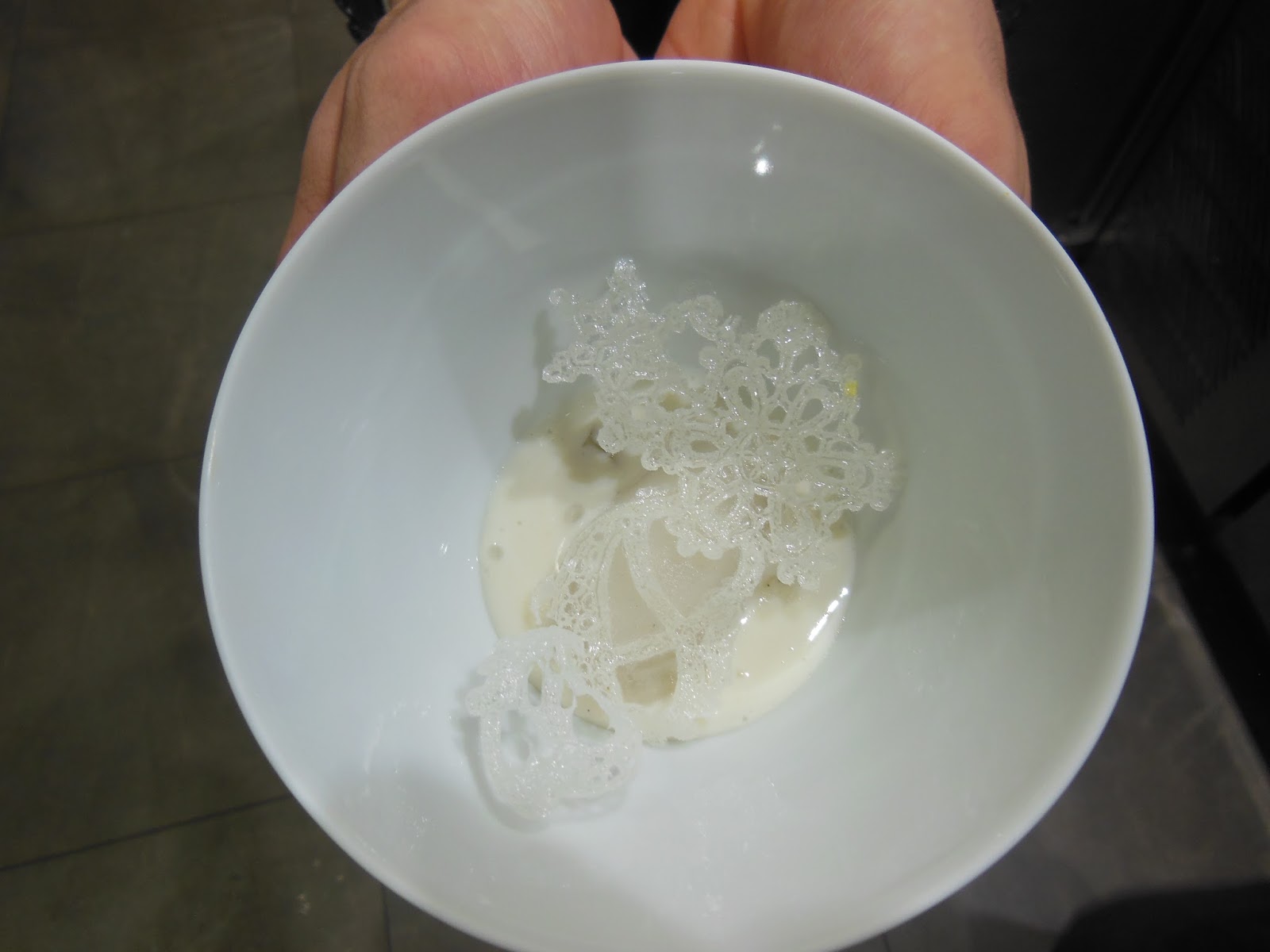
5). Parmigiano air (lighter than foam), cold temperature, was made from 50-month old cheese.


This was another masterpiece and was my 2nd favorite.

6th Course – The Crunchy Part of the Lasagna

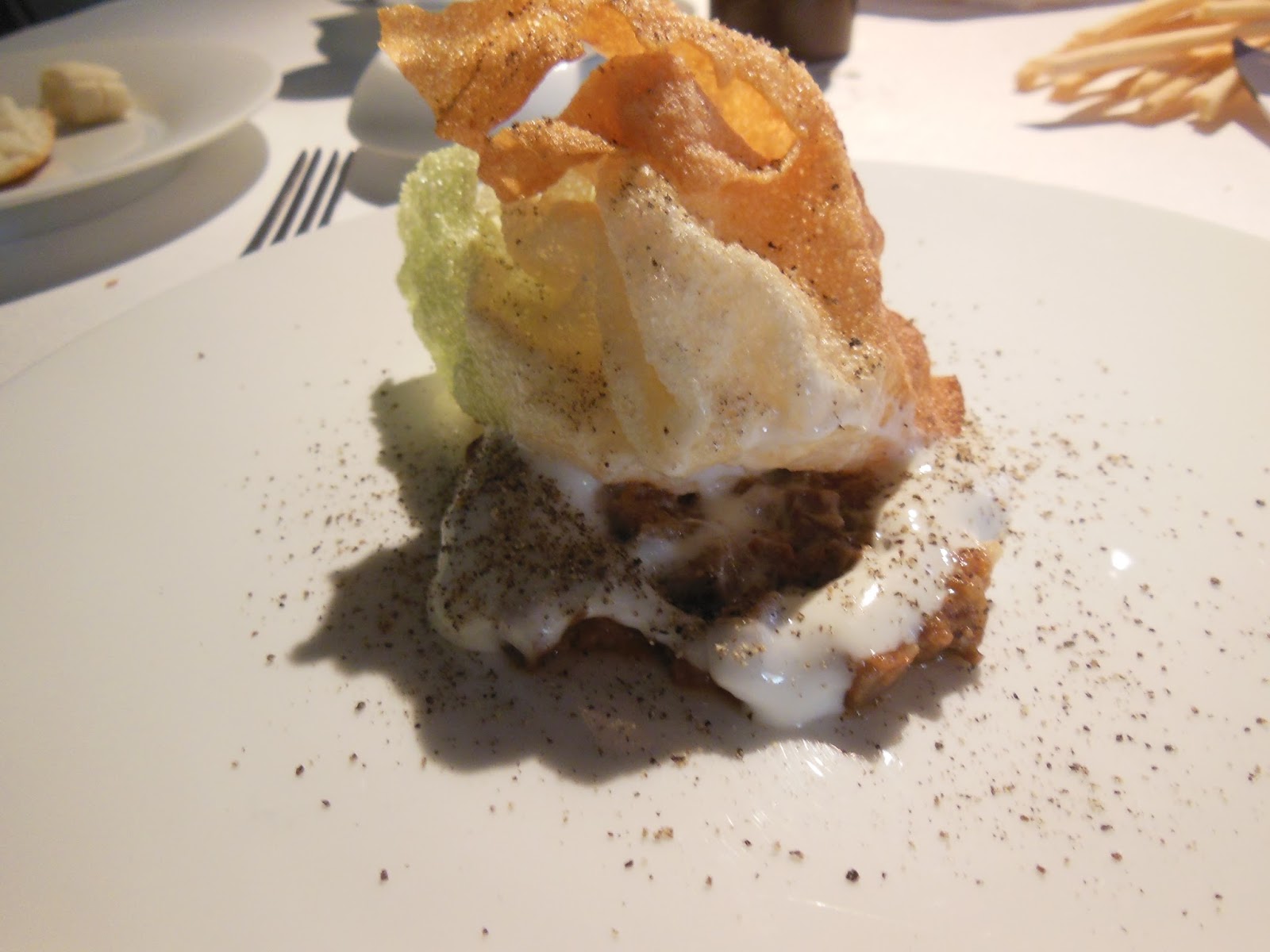
Three different kinds of flavored lasagna (tomato, spinach and original) were cooked, made into paste, dried and fried. They looked very different from their ordinary texture and form as a result of experimenting with molecular gastronomy. It was a true transformation. In the process, they can be made into different shapes and displayed any way you desired vs. the plain old lasagna appearance. These chips were served with Ragu sauce made of veal, pork and bone marrow. It involved a lot of work to transform lasagna into this fancy and artfully looking appearance. But, was the taste incrementally enhanced commensurate with the incrementally enhanced appearance?


7th Course – Spin-painted Veal, not Flame Grilled

It was slow-cooked veal tenderloin surrounded by ashes (which looked grilled). It was served with beet, polenta, yellow pepper sauce, orange pepper sauce, balsamic vinegar and colorfield (in green). The small pile of white flakes were grated fresh horse radish. This dish was inspired by Damien Hirst’s painting at the entrance. This course is a true artful work. It had both the visual as well as palatial pleasure.


8th Course – La Torta di Riso

This is a dish of rice similar to the Five Aged Parmigiano. But, this dish did not offer much pleasure to the taste bud. It comprised of rice cream, licorice/rice granité, toasted rick cake slice (beautifully standing in the middle of the bowl) with anise jello in the cream. The little square piece at the bottom of the bowl was bergamot.


9th Course – Oops! I dropped the Lemon Tart
                    Vignola
The course was comprised of two deserts:

1). Lemon Tart – This is one of Osteria Francescana's signature dishes, made to look like someone dropped the lemon tart, served on a specially designed plate. Lemon sabayon cream at the bottom and topped with cream and then butter tart. Served on the side with green mint, bergamot, lemon pulp, caper, oregano, chili pepper. A well-thoughtfully constructed dish with a well-balanced sweet and citrus flavor.


2). Crispy chocolate cake (with a texture like cookie) at the bottom, topped with a chocolate filled with cherry liquor and cherry sauce inside.


Petit Four – from left to right, mini lemon meringue cake, chocolate with almond, chocolate with hazelnut and passion fruit with coffee. My favorite was passion fruit with coffee. I later met the pastry chef in its kitchen, she informed me this item was a new invention.


After the meal, I had the opportunity to visit its kitchen and met its head chef Takahiko Kondo who is a Japanese. Its kitchen is divided by section and has about 24 staff members.


It was a unique and nice experience to dine at Francescana. Its cuisine was creative, with a lot of focus on the transformation of form and artistic presentation. It delivered Emilia Romania region’s produce and traditions in an ultra-contemporary approach. Two years ago, I dined at the #1 restaurant El Celler de can Roca and have thought of revisiting it ever since. To compare, the current price of tasting menu at Roca is 195 Euro (for 14-courses & multi-course of Amuse Bouche, and more lavish ingredients) and at Francescana is 175 Euro (7-courses and no Amuse Bouche.) I dearly miss Roca.

Monday, July 27, 2015

Atera, NYC


Atera, NYC, 7/17/2015, $257 (incl. gratuity and taxes)

Atera, a Michelin 2-star restaurant, has a new chef Ronny Emborg, a Dane from Copenhagen. He was the executive chef in a Michelin starred restaurant Marchal before joining Atera with New Nordic flair and molecular gastronomy style. Some of the preparations are highly technical and with emphasize on visual appeal.

There is only one set of menu available, the Tasting Menu which is comprised of approximately 18-20 courses, including bread, amuse bouches, appetizers, entrées and desserts. There are two seatings available daily, at 6pm and at 9pm. The price includes gratuity, a European practice.

Atera has an open kitchen with U-shaped counter for customer to eat and watch how each dish was prepared.

1st Course, Green Tomato/Juniper

Dark green colored juniper oil in the middle of the bowl surrounded by white powdery iced green tomato juice. At the last minute, server poured tomato juice from the green tomato. It was very refreshing, served as the palette opener.


2nd Course, Herbs and Flowers/Shrimp

I was informed by my server to start with yellow flower then clockwise. The yellow flower was from Nasturtium plant which is a member of cabbage family with edible leaves and flowers. What made this flower unusual was the stuffing in the middle with Whelk Snails from Maine. Whelk Snails inhabit in the Atlantic Ocean, range from a couple inches to 9 inches long with spiral shell. They have slight briny-sweet taste and slight chewiness. Snails were chopped into small pieces and mixed with mayo into paste. It was very delicate and delicious.  Going clockwise, next was French Sorrell, pea flower, agretti, Fava leaf (with good green-taste flavor) and lime mint (with pungent minty and refreshing taste more than the ordinary mint leaves.) This was the 1st time that I have ever tasted agretti, it is a late springtime Mediterranean succulent with very short season. It looks like a cross between fennel fronds, rosemary and grass and it tastes with robust grassy flavor. What made this course unusual was some of these fresh produce are from Atera’s own greenhouse.

On the side in a bowl, emotion of shrimp was served as dip to accompany each flower or leaf. Shrimp was finely grounded and mixed with olive oil into a very thin paste-liquid. It had a distinctive but not overpowering shrimp flavor.


3rd Course, Baerii Caviar/Pistachio, Beer

Baerii Caviar is from Siberia, it is not too salty and balanced well with the sweet Pistachio ice cream and beer foam.

4th Course, Waffle/Cheddar, Truffle

Crispy waffle was made of unbleached flour and placed at the bottom of the stack. Then, a layer of aged Cheddar cheese was spread on the waffle. The next layer was a master piece of work, a layer of fermented mushroom. Since my taste bud could taste something besides cheddar cheese, I asked one of the chefs and found out that the fermented mushroom would take about two weeks of processes. On top of these spread, there were five slices of gorgeous summer truffles. Bravo, this was my favorite item of the meal.

5th Course, Crab/Tomato, Rose Hip, Pansy

Small pieces of fresh snow crab, from Canada, mixed with diced red tomatoes at the bottom of the bowl, covered by a white layer of dome-shaped jelly made of rose hip and milk. As I broke open the jelly, I noticed there was more layer underneath crab meat. It was the unset soft rose hip jelly. Chef Emborg emphasized the elegant presentation of each dish; this one was adorned with a cute piece of pansy flower. This course was my 4th favorite.


6th Course, Golden Whitefish Roe/Green Almond, Sunchoke

Whitefish roe is in beautiful orange-gold color, it looked very appetizing. This golden roe were small and tasted a bit chewy. Roes are fish eggs which are neither cured nor salted. It was served with almond milk, almond ice and crispy sunchoke (in light brown color). It was adorned by the cute green leaf named “ice flower”. The highlight of this course was the fused taste of almond ice and the roe.
 
7th Course, Scallop/Apple, Horseradish

Scallop credo was at the bottom of the plate, with horseradish snow (powdered iced horseradish), Dianthus dill and dill oil. Each ingredient complemented other ingredients and made a perfect overall taste. Credo dish always required some pungent spicy item to enhance the taste. Here, the powdered iced horseradish served the pivotal role of bringing all other ingredient together.


8th Course, Dumpling/Sepia, Uni

It was a cute bite-size dumpling wrapped with an ultra-thin slice of cuttlefish. What wrapped inside were uni, lark and almond butter. Uni was still half-raw, fresh and quite tasty. Lark is something often brings up the taste, but don’t tell that to your family physician.

I had a replacement dish because of the chewiness of cuttlefish slice. It was risotto made with North Caroline rice and egg yolk, with little cute nasturtium flower adorned on the top.


9thCourse, Oyster/Ponzu

Island Creek oyster was served with elderberry and ponzu sauce. It was adorned with Queen Ann flower. The special feature in this course was the warm ponzu sauce. When I visited Tokyo a year ago, I found out that Japanese restaurant in Tokyo purposely raised the dining room temperature and using the body temperature to warm up seafood in the whole process of serving customer. Their way was in contrary to what we practice in US; here we like to make everything cold.  The reason for keeping things a bit warmer was to enhance the flavor of seafood.


10th “Course, Whole Wheat Batard

I was eager to munch on bread by now and was glad the restaurant finally served a slice of house-made sour dough bread. There were two kinds of butter served, one was the regular butter and the other one was butter with brown onion.

11th Course, Razor Clam/Bitter Greens, Miso

Razor clams was poached and diced, served with baby green pea leaves. Sauce was made of foamy brown butter and miso, with beautiful little flower on top. Razor clams were thoroughly cleaned and sweet, they were less chewy than Whelk Clam served earlier in the evening.

12th Course, Sourdough Croissant

A whole wheat flaky mini croissant was served. It was slightly warm when you touched it.

13th Course, Monkfish/Snow Peas

Monk fish was excellently prepared; it was still half-raw in the center and tasted tender. It was with one of the best textures that I have ever had. At the bottom, there were some purple colored snow peas and white currants on the side. White currants were small and looked like little crystal balls. This was the 1st time that I tasted purple snow peas. Purple snow peas had lesser green taste than the green snow peas. Fish was served with orange blossom Sabayon sauce. Orange blossom was not too overwhelming; this course was another perfect inspiration.


14th Course, Onion/Mushroom

This course was comprised of varieties of mushroom, Maitake, milk cap and Chanterelle, and Nasturtium leaves, served with foamy French Oulett cheese sauce. On the side, there was one thinly sliced onion marinated in Champagne vinegar. This piece of onion greatly enhanced the balance of this course.

15th Course, Foie Gras/Black Currant

I dearly loved this course. Warm foie gras topped with chopped roasted peanuts, covered with a red color sheet made of black currant. This sheet was not made of jelly. It was made by dehydrated black currant juice. The flavor was full, not overwhelming but intensive, it was much better than the ordinary jelly often served with foie gras. This was my 2nd most favorite for the evening.


16th Course, Lamb En Croute/Huckleberry, Allium
This was a very sophisticated course with multiply layers of arrangements. Lamb was from a Pennsylvania farm, served medium-rare. It was served in a brioche crust, on casing of brioche. After I started slicing lamb, I realized there was another layer of something on the brioche. I found out, there was a thin layer of chicken mousse topped with burned onion powder. Lamb was placed on top of brioche crust, chicken mousse and burned onion powder and then topped with sliced black kale (in white color looked almost like sliced garlic), onion and red currant. This course was a true master piece. It was my 3rd favorite for the evening.

17th Course, Cucumber/Lemon Verbena

This course was the palette cleanser. Cucumber granite was served with lime meringue. Some lemon verbena leaves and St. Johns Worth were on the side for decoration as well.  Lemon verbena mousse was under the cucumber granite to offer a refreshing taste.

18th Course, Milk/Raspberry, Tarragon

This is the 2nd time that I had cooked potato in desert. The 1st time was at L’Astrance , Paris. At Atera, cooked potatoes were diced and served with raw milk sorbet, then topped with wild raspberry. Wild raspberry had a darker color then ordinary raspberry and had a fuller taste than raspberry. Some clover leaves were on the side of sorbet for decoration. Tarragon sauce played the important role of turning this raw milk sorbet desert into a more sophisticated taste.

19th Course, Chocolate Cake

I got a complimentary cake, with chocolate glazing and milk chocolate mousse inside.

20th Course, FlØdeboller

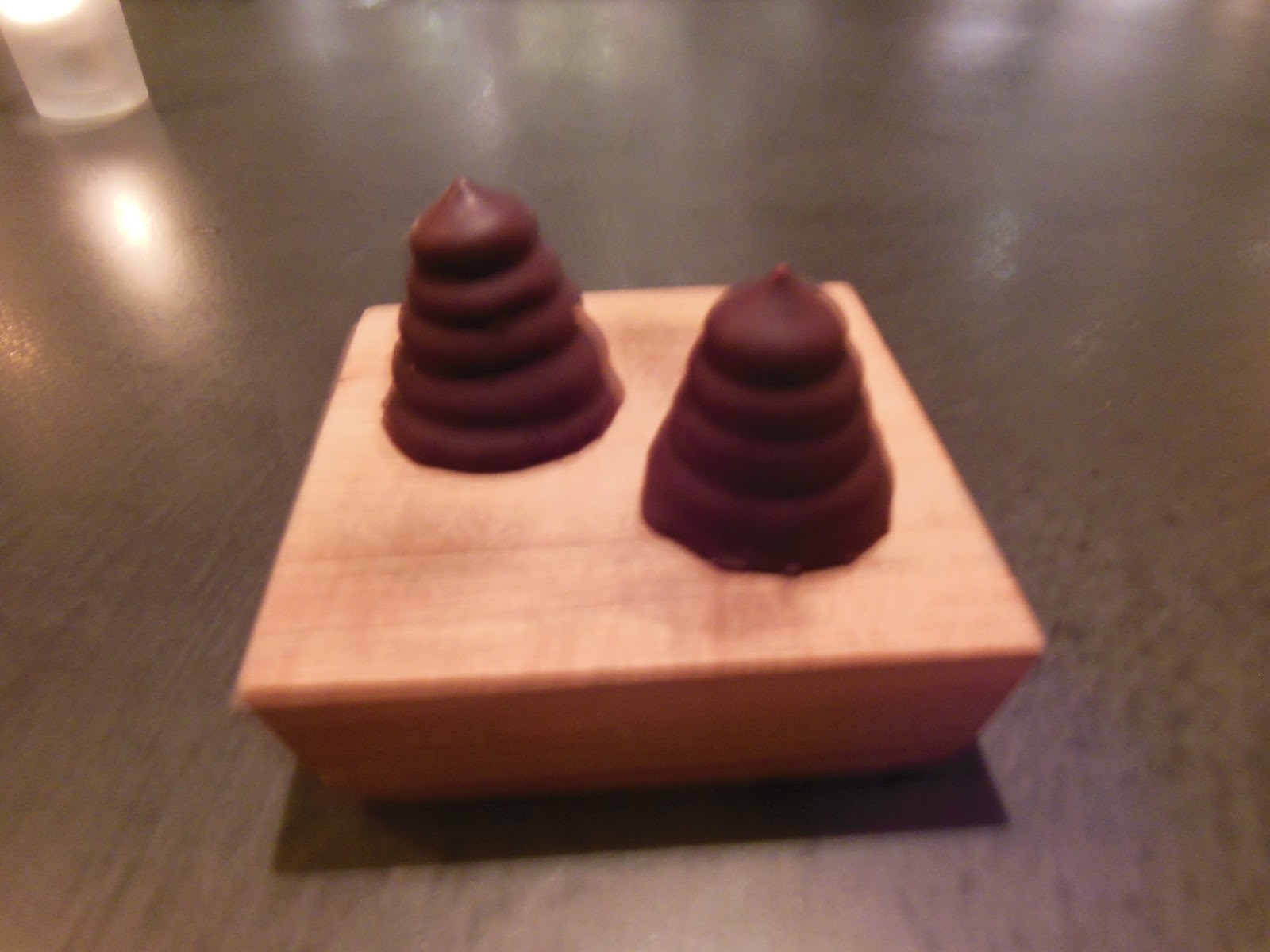
This is the traditional Danish sweet. Two of them with two different flavors, both shaped like chocolate covered spiraled cones. One was with black garlic flavored cream on a layer of pistachio cream and chocolate cookie at the bottom. The other was with beet cream and you can see the light red color in the middle once you bit on it.


After the dinner, I had an escorted tour of their back-kitchen operation in the basement. It has each dry ingredient labeled in a plastic container and placed on the shelf. Things were neat and organized. What surprised me most was their greenhouse. There are at least 80+ varieties of herbs growing in the green house. Nordic people are very adaptive at growing fresh produce in the green house to overcome the inconvenience from cold climate. Since chef Ronny is from Copenhagen, he migrated the Nordic practice to NYC. He even kept a few fans to ventilate the air in the greenhouse because Nordic people believe in the stimulus from the wind can make produces’ stems stronger. Customers may not know they have got the best quality of herbs and produce served in their plates when dining at Atera. I have visited quite a few Michelin starred restaurants back-kitchen facility and have not found any other restaurant have greenhouse facility. With the quality, technical expertise, elaborate presentation and creativity offered to customer, Atera is an under-appreciated charm in NYC.